Free for personal use
Federal rules let anyone pick berries in a national forest free of charge for personal, non-commercial use, within the limits the forest sets. Selling them needs a permit from the Ottawa National Forest.
Black River Scenic Byway · Thimbleberries
When the wild thimbleberries ripen along the byway and the Lake Superior shore, with a forecast that moves with this year’s weather.
Loading…
Based on temperatures at the National Weather Service cooperative station in Ironwood. The lakeshore runs a few days behind inland spots.
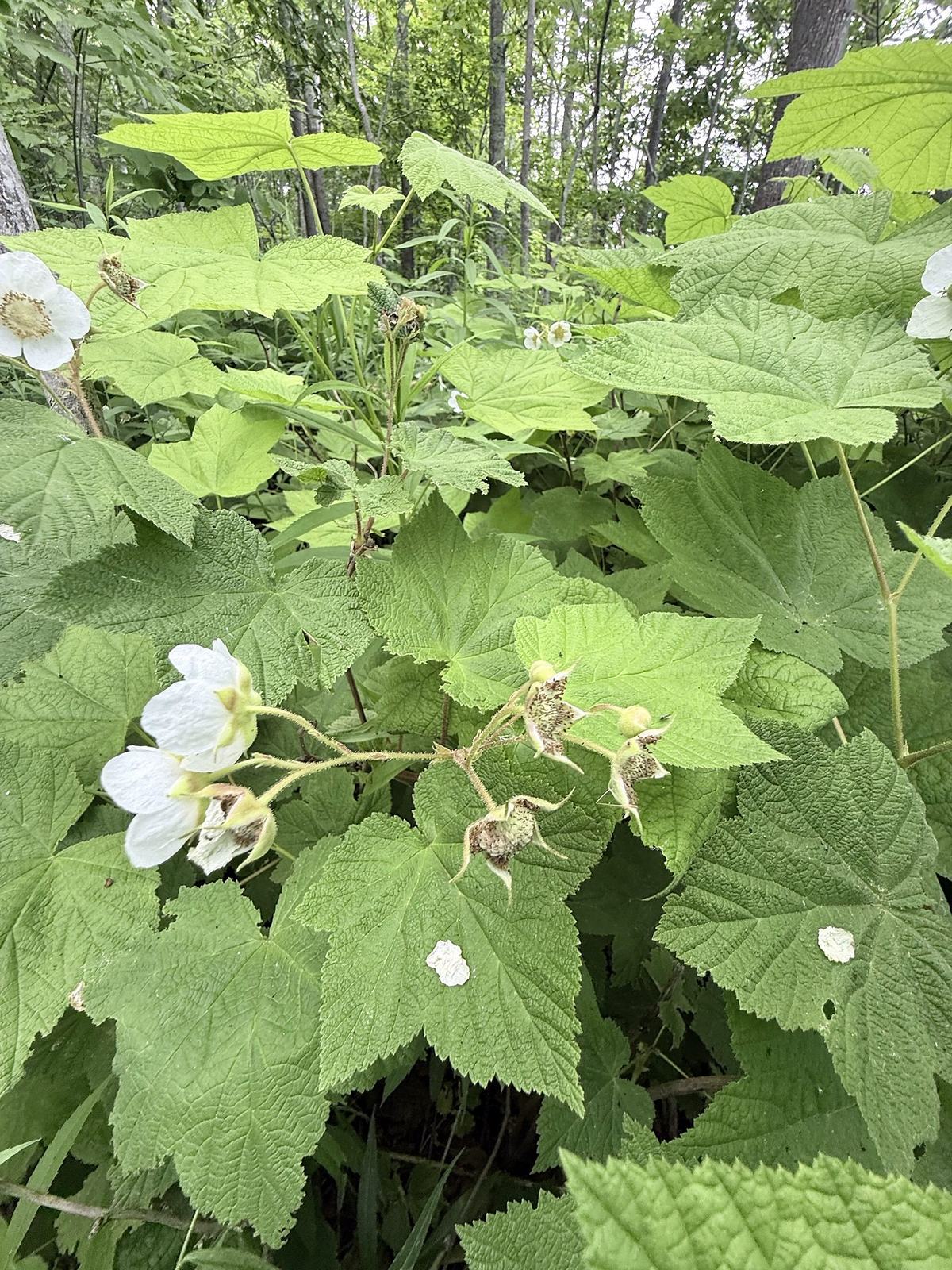
Thimbleberries bloom with big white flowers in June and ripen from about the middle of July into August along the Lake Superior shore. Bushes ripen a few berries at a time over many weeks, so the same patch is worth visiting again and again.
Average dates come from community flower and fruit records for the western Upper Peninsula and Lake Superior shore (iNaturalist), a small sample, so treat them as a guide. Darker bars mark the usual peak.
Plants ripen on accumulated warmth, not the calendar. This chart tracks the season's growing degree days since March 1 (each day's average temperature above 41°F) against the 30-year normal. A warm June pulls the berries earlier; a cool one pushes them back.
Normal (1996–2025)This seasonForecastForecast ripening dates
How it works: the forecast compares this season's heat (observed so far, then the National Weather Service 7-day forecast, then normal weather) with the heat an average season has built up by the time the berries ripen. Daily temperatures: NOAA cooperative station, Ironwood, via the ACIS climate data service.
Thimbleberries grow in sunny openings: along roadsides, trail edges, old logging clearings and the edges of the woods. Along Lake Superior they are almost continuous, and the byway has plenty of patches in the openings near Black River Harbor.
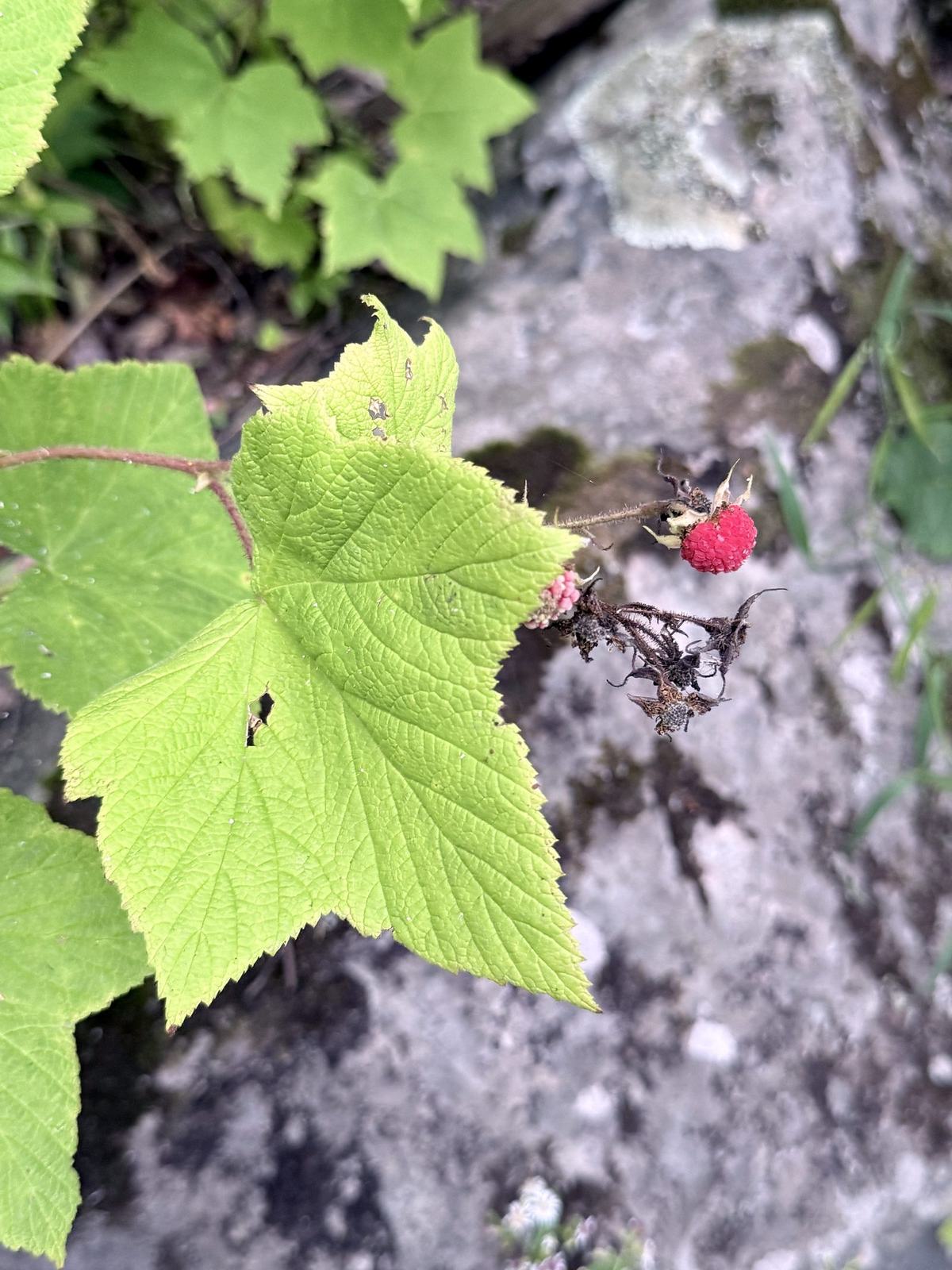
Look for thornless canes three to six feet tall with big, soft, maple-shaped leaves. A ripe berry is deep red and so soft it lifts off the stem at a touch, leaving a hollow cap like a thimble. Pale pink or salmon berries need a few more days.
They are too soft to ship, which is why you rarely see thimbleberries for sale outside the Lake Superior country. Pick into a shallow container and eat or cook them the same day.
Federal rules let anyone pick berries in a national forest free of charge for personal, non-commercial use, within the limits the forest sets. Selling them needs a permit from the Ottawa National Forest.
Michigan DNR asks pickers to leave some berries so plants can keep spreading, and plenty of birds and bears count on them too. Don’t break the canes.
Only eat what you can identify with certainty. Thimbleberries have no thorns and no look-alikes with those huge soft leaves, but wash everything and pick away from busy roads.
On Michigan’s Keweenaw Peninsula, thimbleberry jam is a local institution, made from berries hand-picked along the same kinds of roadsides you drive on the byway. A Michigan Tech study estimated the jam trade there at about $150,000 a year, with pickers paid by the pound, and found most pickers do it simply because they enjoy being out in the woods.
The Big Powderhorn Village is where the byway begins: make one of its chalets or condos your base for the falls and the harbor.
Along the Lake Superior shore the first ripe berries usually appear around mid-July, with the best picking from late July into early August. A warm summer brings them earlier; the forecast on this page adjusts for this year’s weather.
In sunny openings: along Black River Road and other roadsides, trail edges and forest clearings. They are especially common near the Lake Superior shore.
Yes, for personal use. Federal rules allow free picking of berries in national forests for personal, non-commercial use within the limits the forest sets. Selling them requires a permit.
It turns deep red and lifts off the stem with the lightest touch, leaving a hollow cap like a thimble. Pink or salmon berries are not ready yet.
Sweet-tart, somewhere between a raspberry and a wild strawberry, and very soft. Most are eaten fresh or made into jam the same day.


